Description
Oxytocin Overview
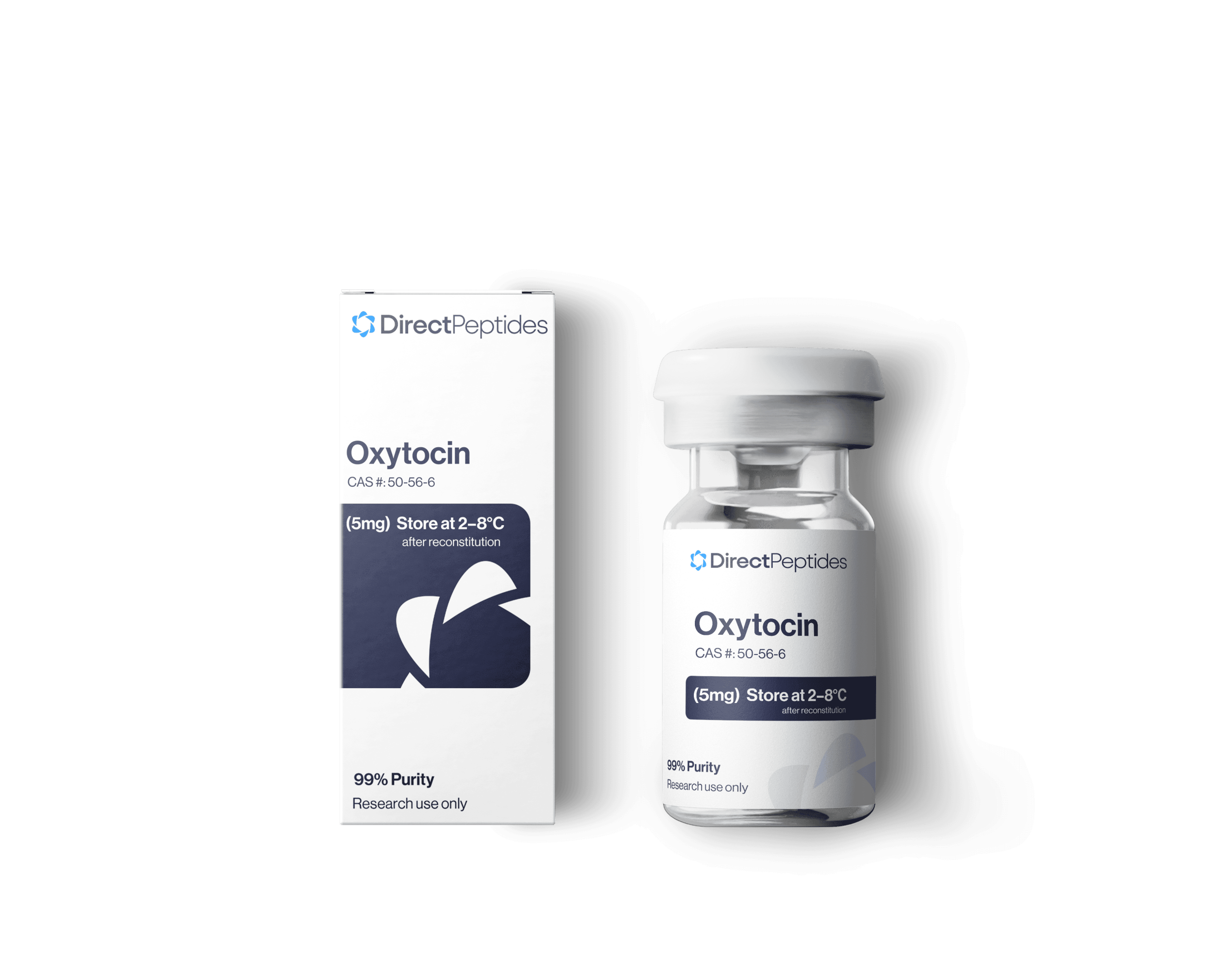
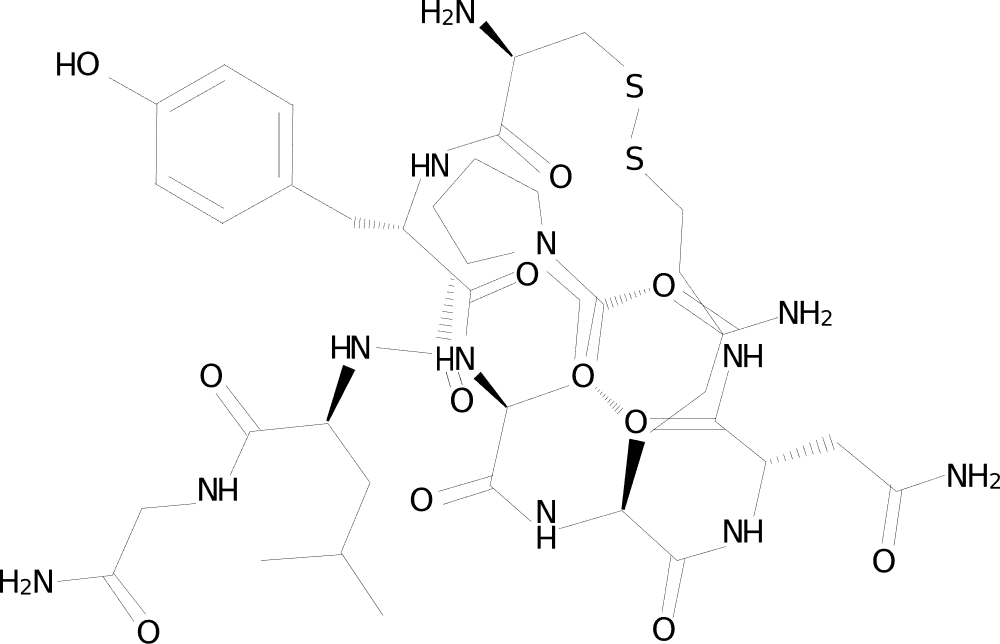
Oxytocin is a cyclic nonapeptide with a disulfide bridge between the cysteine residues at positions 1 and 6. It is made as a prohormone in hypothalamic magnocellular neurons and transported to the posterior pituitary for release.
It binds its receptor, OXTR, a G-protein-coupled receptor that activates phospholipase C pathways, leading to intracellular calcium release and protein kinase C activation. Research models examine its effects on smooth muscle signaling, myoepithelial contraction, CNS behavioral pathways, stress response signaling and autonomic nervous system modulation.
Oxytocin Research Focus
Published laboratory and preclinical work on Oxytocin has concentrated on the following areas:
- OXTR G-protein-coupled receptor signaling
- Phospholipase C and calcium pathways
- Smooth muscle signaling
- CNS behavioral and stress pathways
Available Formats
Oxytocin is available in 5mg vials. Each strength can be ordered as a single vial or as a pack of 10 vials; choose your options above before adding to the cart.
Handling and Storage
Store and handle Oxytocin according to the product label and your laboratory’s standard operating procedures. For background on the factors that affect stability, such as temperature, moisture, light and repeated freeze-thaw cycles, read our guide to peptide storage and stability.
Reference
Gimpl & Fahrenholz (2001); Lee et al. (2009). Find this reference on PubMed.
Related Research Peptides
Browse the full Neuropeptides & Neuroendocrine range or search the shop.
For research use only. Oxytocin is intended exclusively for legitimate laboratory research. It is not for human or veterinary consumption and is not a drug, food, supplement or cosmetic. Nothing on this page is medical advice. By purchasing, the buyer agrees to use this product in compliance with all applicable laws.


Reviews
There are no reviews yet.